
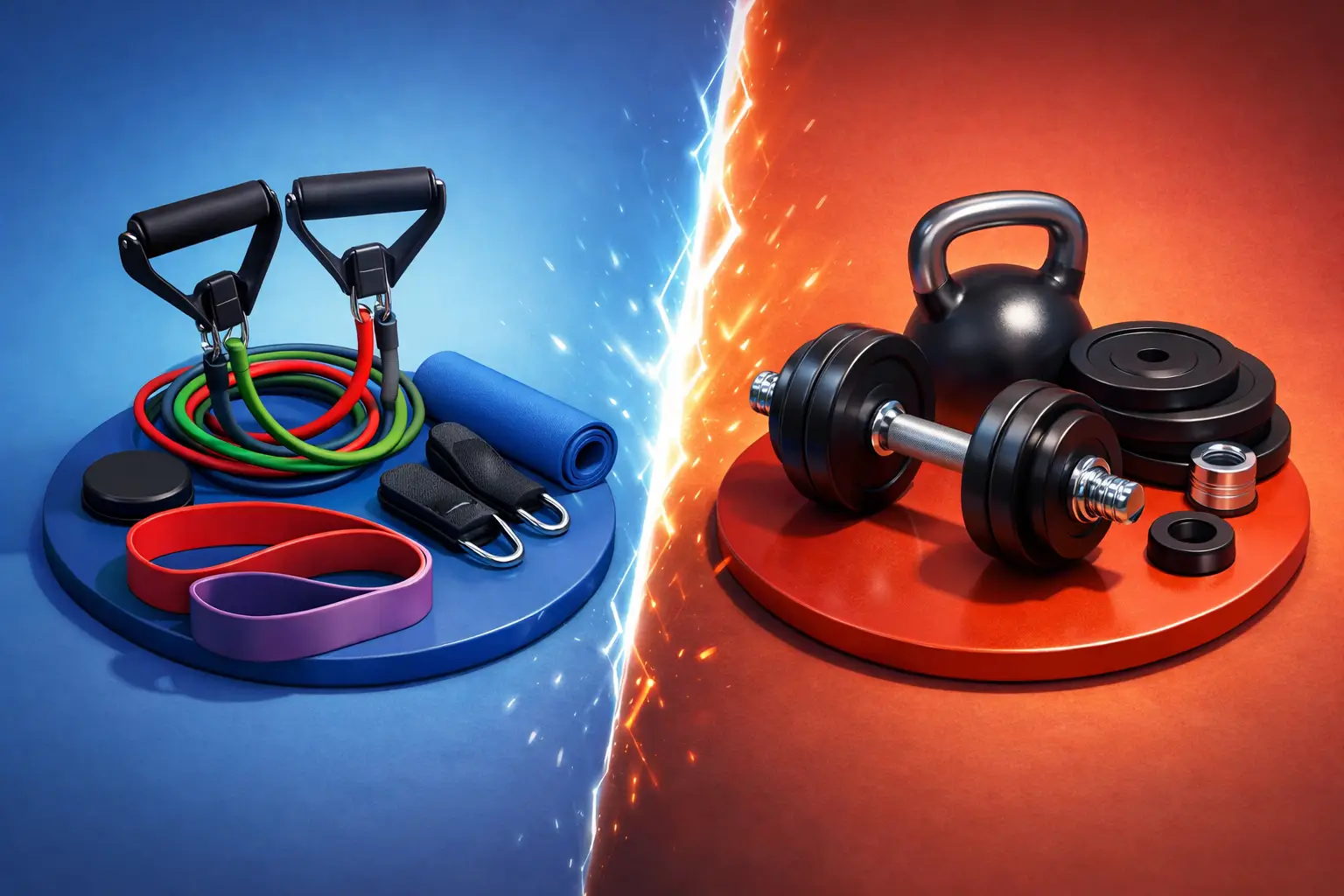
If your workout space is a bedroom corner, a living room rug, or a small home gym, resistance bands vs dumbbells is not a minor choice. It affects how much room you need, how much you spend, and how likely you are to keep training. For shoppers who want real results without turning fitness into an expensive project, both tools can work well – but they do not work the same way.
Resistance bands vs dumbbells: the real difference
The simplest difference is how they create tension. Dumbbells use gravity. A 15-pound dumbbell weighs 15 pounds from the first rep to the last. Resistance bands create tension as they stretch, so the exercise often gets harder at the top of the movement.
That changes how workouts feel. With dumbbells, a curl or press gives you a steady, familiar load. With bands, the resistance can feel lighter at the start and tougher as you move through the range. Some people like that because it challenges the muscles differently. Others prefer the predictable feel of free weights.
Neither option is automatically better. The smarter question is what you want most from your training – muscle gain, convenience, lower cost, easier storage, or joint-friendly workouts.
Which is better for building muscle?
If your goal is straightforward strength and muscle building, dumbbells usually have the edge. They make progressive overload easier because you can clearly increase weight over time. Moving from 10-pound dumbbells to 15-pound dumbbells is simple to track, and that matters when you want measurable progress.
Dumbbells also work especially well for classic compound and isolation movements like goblet squats, shoulder presses, rows, chest presses, lunges, curls, and triceps extensions. The load feels consistent, which helps many beginners learn form and helps more experienced users push heavier sets.
Resistance bands can still build muscle, especially for beginners, people returning to exercise, and anyone training at home with limited space. They create constant tension and can make simple movements surprisingly hard. Glute bridges, lateral walks, rows, chest presses, squats, and shoulder work can all be effective with bands.
The trade-off is ceiling. If you become stronger quickly, a basic set of bands may feel limiting unless you stack bands, adjust anchor points, or buy heavier options. That is workable, but it is not always as convenient as picking up a heavier dumbbell.
Which is better for fat loss and general fitness?
For fat loss, the tool matters less than consistency. You lose fat by maintaining a calorie deficit and sticking to regular activity. Both bands and dumbbells can support that through strength training, circuit workouts, and higher-rep sessions that raise your heart rate.
Bands are excellent for fast, low-space workouts. You can move from squats to rows to presses to core work without needing a rack of equipment. That makes them appealing for busy schedules, apartment living, and travel.
Dumbbells are also great for efficient workouts, especially if you like simple full-body sessions. A pair of adjustable dumbbells can cover a lot of ground. If you enjoy the feel of weighted movements, you may be more motivated to stay consistent, and that is a big advantage.
Cost, storage, and convenience
This is where resistance bands often win.
A band set is usually cheaper than building even a basic dumbbell collection. Bands are lightweight, easy to store, and simple to pack in a suitcase or drawer. If price and space are your main concerns, bands give strong value for the money.
Dumbbells take up more room and usually cost more, especially if you need multiple weights. Adjustable dumbbells can reduce clutter, but they are still a bigger upfront investment than bands.
For many shoppers, this is the deciding factor. If you want affordable fitness gear that does not take over your home, bands are hard to beat. If you are willing to spend more for a more traditional strength setup, dumbbells can feel like the better long-term buy.
Resistance bands vs dumbbells for beginners
Beginners can succeed with either one, but the best choice depends on comfort level.
Dumbbells are intuitive. Most people understand how to hold them and move through common exercises. That simplicity helps when you are just getting started and do not want to think too much about setup.
Bands are beginner-friendly too, but they can take a little more practice. You need to learn how to position them, control tension, and secure them properly if you are using anchors. Once you get used to that, they are easy to use.
If you are nervous about heavy weights or want a lower-impact starting point, bands can feel less intimidating. If you want obvious, trackable strength progress right away, dumbbells may feel more satisfying.
Joint comfort and injury concerns
For people with cranky shoulders, elbows, knees, or wrists, resistance bands can be a smart option. Because the resistance builds gradually, some exercises feel smoother and less jarring than with fixed weights. Bands also allow more freedom to adjust angles and hand positions.
That said, dumbbells are not bad for joints by default. Poor form, too much weight, and rushing progress usually cause more problems than the equipment itself. Many people train safely with dumbbells for years.
If joint comfort is a top priority, bands often offer a gentler entry point. If you already move well and use good form, dumbbells can be just as safe and highly effective.
Exercise variety and training flexibility
Bands are more versatile than many shoppers expect. You can use them for upper body, lower body, mobility work, warmups, core training, stretching, and rehab-style exercises. Loop bands, tube bands, and fabric glute bands each add different options.
Dumbbells are also versatile, but in a different way. They are excellent for classic strength exercises and unilateral training, where one side works at a time. That makes them useful for building coordination and fixing strength imbalances.
If you want one tool for workouts, activation drills, and mobility sessions, bands offer broad flexibility. If you want one tool for traditional strength training with clear load progression, dumbbells stand out.
Who should choose resistance bands?
Resistance bands make the most sense if you want affordable equipment, easy storage, and workouts you can do almost anywhere. They are a strong fit for apartment dwellers, travelers, beginners, and anyone adding light strength work to a wellness routine.
They are also useful if your fitness plan includes stretching, posture work, glute activation, Pilates-style movement, or recovery sessions. For shoppers building a home setup on a budget, bands give a lot of options without a big spend.
Who should choose dumbbells?
Dumbbells are the better pick if your main goal is getting stronger, building muscle more aggressively, and following a more traditional resistance program. They are ideal if you like measurable progress and want workouts that feel closer to a gym experience.
They also suit people who do not mind investing more upfront for equipment they can use for years. If you know you enjoy strength training, dumbbells are often the more satisfying main tool.
The best answer for most people
For many home users, this is not really an either-or decision. A small set of bands plus one or two pairs of dumbbells covers more training needs than either tool alone. Bands can handle warmups, mobility, glute work, travel, and lighter days. Dumbbells can handle your main strength work.
That combination is practical, space-conscious, and often more budget-friendly than buying a full rack of weights. It also gives you options, which makes it easier to keep working out when your schedule, energy, or goals change.
If you are buying just one first piece of equipment, let your daily reality decide. Limited budget and limited space point toward bands. A stronger focus on muscle and strength points toward dumbbells. The right choice is the one you will actually use three times a week, not the one that looks best in theory.
At Health Beauty Care, the smartest fitness buys are the ones that fit your routine, your space, and your budget. Start with the tool that removes excuses, makes home workouts easier, and helps you stay consistent. Results usually follow the gear you keep within reach.