
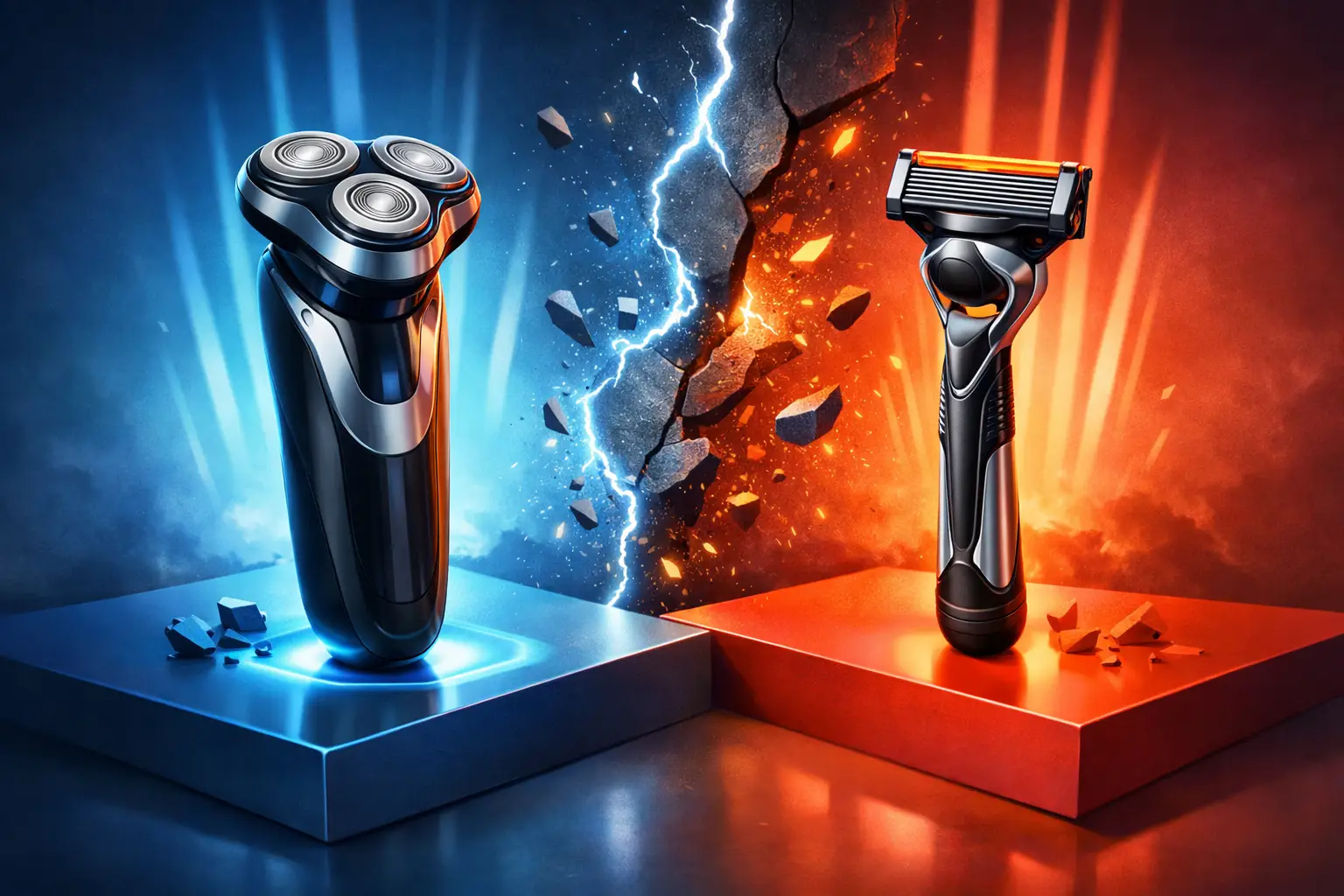
Some people want the closest possible shave before work. Others just want to clean up fast without razor burn, nicks, or a sink full of shaving cream. That is why the electric shaver vs razor question keeps coming up – the right choice depends on your skin, your routine, and how much time and upkeep you want.
If you are shopping on value, this decision matters even more. A low upfront price does not always mean lower long-term cost, and the fastest option is not always the best for sensitive skin. The good news is that both tools can work well at home. You just need the one that fits your habits instead of fighting them.
Electric shaver vs razor: the real difference
At a basic level, a manual razor cuts hair right at skin level with an exposed blade. An electric shaver cuts through a foil or rotary head that separates the blade from direct skin contact. That one design difference affects almost everything else – closeness, comfort, speed, noise, maintenance, and how forgiving the tool feels when you are half awake.
A razor usually gives the closer shave. If you want that smooth, nearly glass-like finish on the face, legs, underarms, or bikini line, a manual blade still has the edge. It removes hair more aggressively, which is great for results but not always great for skin.
An electric shaver usually feels gentler. Because the blade is not dragging directly across the skin in the same way, many people get less irritation, fewer cuts, and a quicker routine. The trade-off is that the shave may not feel quite as close, especially if you compare it right after use.
When a razor is the better buy
A manual razor makes sense if your top priority is closeness. For many users, especially those shaving facial hair daily or wanting very smooth legs, a razor delivers the finish they are after with fewer passes.
Razors are also simple. You do not need charging cables, replacement heads with specific fit, or battery life management. You can keep a handle and swap cartridges, or use disposable razors when convenience matters more than longevity.
That said, cheap razors can become expensive over time. Cartridges add up. Shaving cream, gel, and aftercare can add up too, especially if your skin gets irritated and you start buying extra products to calm it down. A razor can be budget-friendly, but only if you count the ongoing cost honestly.
Skin type matters here. If your skin is resilient and you rarely deal with ingrown hairs or redness, a razor can be an easy choice. If your skin reacts quickly, the close result may come with a price.
Best fit for a razor
A razor is often the better option for people who want a very close finish, do not mind a wet shave routine, and are comfortable taking a little more time. It also suits those who shave less often and want to remove longer growth more cleanly in one session.
When an electric shaver makes more sense
An electric shaver is built for convenience. You can often shave faster, with less prep, and in many cases without foam, gel, or even water depending on the model. That is a big plus for busy mornings, travel, gym bags, and quick touch-ups.
For sensitive skin, electric models are often easier to live with. They tend to reduce direct blade contact, which can mean fewer nicks and less post-shave sting. If you are prone to razor bumps on the neck, jawline, or bikini area, switching to electric can improve comfort even if the shave is not quite as close.
The upfront price is usually higher than buying a basic razor. Still, many shoppers find the long-term cost more predictable. Instead of replacing cartridges frequently, you replace foils, cutters, or heads on a longer cycle. If you shave often, that can work out well.
Electric shavers also suit people who like low-mess grooming. No lather cleanup, fewer wet surfaces, and less setup can make the whole routine feel easier to stick with.
Best fit for an electric shaver
An electric shaver is usually the better choice for people who shave often, want speed, have sensitive skin, or prefer a simpler grooming routine. It is especially useful if convenience matters more than achieving the absolute closest possible finish.
Closeness vs comfort
This is the heart of the electric shaver vs razor decision. Most people are really choosing between a closer shave and a more comfortable one.
A manual razor cuts closer because the blade meets the hair with minimal barrier. That can leave skin feeling smoother right away. It can also increase friction, especially with repeated passes or poor lubrication.
An electric shaver creates a buffer between blade and skin. That helps with comfort, but a few hairs may remain just above skin level. On the face, that might mean stubble returns a little sooner. On body areas, it may simply mean the finish feels less polished.
If your skin gets red easily, comfort tends to win. If appearance and smoothness are your top goals for a specific area or occasion, closeness tends to win. Many people end up using both for exactly that reason.
Speed, learning curve, and day-to-day use
An electric shaver often wins on speed once you get used to it. Pick it up, switch it on, and you are shaving. There is less prep and less cleanup, which is ideal if grooming is one more task in a busy day.
Razors take more setup. You usually need warm water, shaving cream or gel, and a bit more focus. The process is not difficult, but there is less room for rushing. If you push too hard or use a dull cartridge, your skin usually tells you right away.
There is also a small learning curve with both. Electric shavers work best with the right motion for the head style, while razors work best with light pressure, clean blades, and the right direction of shave. Technique matters more than many shoppers expect.
Cost over time
If you only look at the price tag, razors often seem cheaper. That can be true at checkout. Over months, though, the math can shift.
With a razor, you may keep buying cartridges, disposables, cream, and aftershave. With an electric shaver, you pay more upfront, then maintain it with replacement parts and occasional cleaning accessories. Neither option is automatically cheaper for everyone.
The better value depends on how often you shave and what products you need around it. A daily shaver with sensitive skin may spend less over time with an electric option. Someone who shaves occasionally may get better value from a simple manual razor and a small supply of refill blades.
For deal-focused shoppers, this is where broad product choice matters. Being able to compare entry-level tools, replacement parts, and skin-care add-ons in one place makes it easier to build a routine that fits your budget instead of overspending on one premium item.
Which option is better for sensitive skin?
If your skin is easily irritated, an electric shaver usually has the advantage. It tends to reduce cuts, lower friction, and make over-shaving less likely. That does not mean every electric model is automatically gentle, but in general it is the safer starting point.
A razor can still work for sensitive skin if you use a sharp blade, good lubrication, light pressure, and proper aftercare. The problem is consistency. Miss one step, use a worn cartridge, or rush through your routine, and irritation can show up fast.
For areas prone to bumps and ingrown hairs, many users find electric shaving easier to manage. The slightly less close cut can actually help by reducing how often hairs get trapped under the skin.
Is it smart to own both?
For a lot of shoppers, yes. This is not always an either-or decision.
An electric shaver can handle quick weekday grooming, travel, and sensitive areas where comfort matters most. A razor can be the option for special occasions, detail work, or whenever you want the closest finish possible. Using both can also extend the life of your razor cartridges because you are not relying on them every single time.
This kind of mixed routine often gives the best balance of value and results. It also lets you adjust based on season, skin condition, and how much time you have that day.
How to choose without overthinking it
If you want the shortest path to a decision, ask yourself three things. Do you care more about closeness or comfort? Do you shave often or only once in a while? And do you want low upfront cost or lower effort over time?
Choose a razor if you want the closest shave, do not mind a wet routine, and your skin handles blades well. Choose an electric shaver if you want speed, convenience, and a gentler experience. If your answer changes depending on the day or body area, owning both is not overkill. It is practical.
At Health Beauty Care, that is how many smart shoppers approach grooming products – buy for real-life use, not just packaging claims. The best shave is the one you will actually keep using because it fits your skin, schedule, and budget.
A good grooming routine should save time, not create problems. Pick the tool that makes shaving easier on your skin and easier on your wallet, and you will feel the difference every morning.