
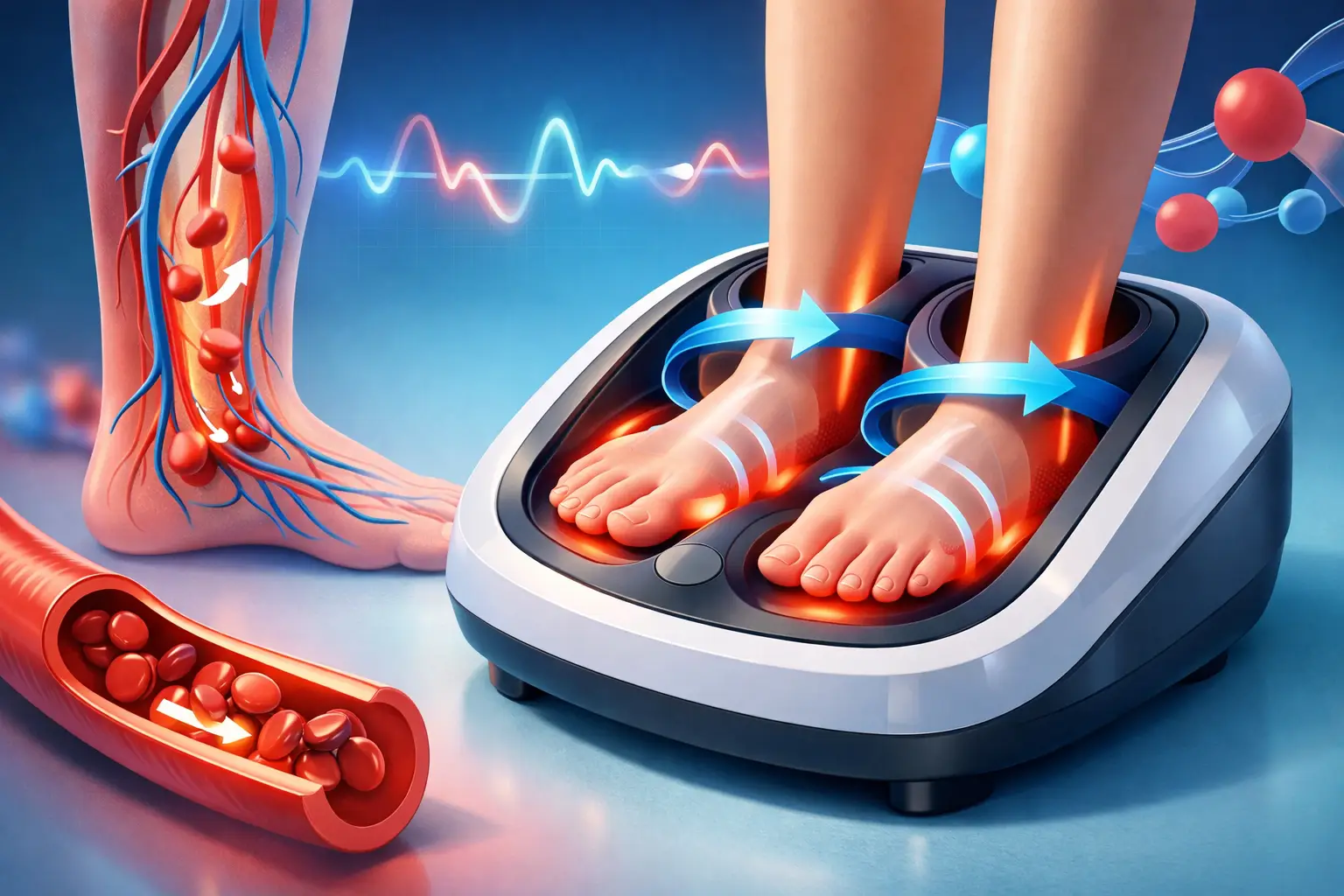
If your feet feel cold at night, look puffy after a long day, or just seem tired and heavy, it is fair to ask: can foot massagers help circulation? The short answer is yes, they can support blood flow and help your feet feel better, but they are not a cure for every circulation problem. What they do well is encourage movement in the tissues, reduce that stiff, sluggish feeling, and make recovery more comfortable at home.
Can foot massagers help circulation or just feel relaxing?
They can do both. A foot massager applies pressure, vibration, kneading, rolling, compression, or heat to the feet and sometimes the ankles and calves. That stimulation may help promote temporary blood flow in the treated area, especially after long periods of standing or sitting.
For many shoppers, that practical benefit matters more than the spa factor. If you work on your feet, spend hours at a desk, travel often, or wear tight shoes, your feet can feel swollen, tense, or fatigued. A home foot massager can help ease that discomfort and support better day-to-day comfort without booking appointments or spending premium prices.
That said, there is a difference between helping circulation and treating a medical circulation disorder. If you have severe numbness, skin color changes, wounds that heal slowly, or ongoing leg pain, a massager is not the first place to start. Those symptoms deserve medical attention.
How foot massagers may support circulation
Circulation is simply the movement of blood through your body. Your feet are far from your heart, so they often show the effects of poor movement first. Sitting too long, standing too long, inactivity, tight muscles, and pressure on the lower legs can all leave your feet feeling off.
Massage helps by mechanically stimulating soft tissue. That pressure may encourage local blood flow for a period of time. Compression-style models can also create a squeeze-and-release effect that some people find especially helpful when their feet feel swollen or congested. Roller and kneading styles may help loosen tight tissue, while vibration can make the feet feel more awake and less stiff.
Heat is another feature many shoppers look for. Warmth can feel especially good on cold feet and may help muscles relax, which can make the massage feel more effective. Heat alone is not the same thing as fixing a circulation issue, but paired with massage, it often improves comfort.
What results you can realistically expect
A good foot massager can help your feet feel warmer, lighter, and less tense after use. Some people notice less puffiness after long days. Others buy one because they want relief from soreness after walking, workouts, or standing shifts.
The key word is support. A home-use foot massager is best viewed as a convenience tool for regular comfort and recovery. It may be part of a smarter routine that includes moving more often, stretching, staying hydrated, and wearing supportive footwear.
If your goal is immediate relief, a massager can be a strong value buy. If your goal is to correct a serious vascular condition, expectations need to stay realistic. In those cases, the device may still help with comfort, but it should not replace proper care.
Who may benefit most from using one
Foot massagers tend to make the most sense for people whose circulation feels sluggish for lifestyle reasons. Desk workers, drivers, travelers, retail workers, hospitality staff, gym users, and older adults often like them because the feet take a lot of daily strain.
They can also be useful if you deal with everyday foot fatigue, mild swelling from standing, or that cramped feeling that builds up at the end of the day. Many people also use them as part of an at-home wellness routine because they want something simple, affordable, and easy to use without leaving the house.
For budget-conscious shoppers, this is where product variety matters. Some want a compact manual roller for quick use under a desk. Others prefer an electric shiatsu-style machine with heat and air compression. The right choice depends on how often you plan to use it and what kind of relief you want.
When a foot massager may not be the right choice
There are situations where extra caution makes sense. If you have diabetes with reduced sensation, neuropathy, varicose vein pain, blood clots, severe swelling, open sores, fractures, or a diagnosed circulation disorder, talk to a healthcare professional before using a foot massager. Strong pressure or heat may not be appropriate for everyone.
Pain is another warning sign. A massager should feel relieving or comfortably intense, not sharp or alarming. If a device leaves you more swollen, more numb, or in more pain, stop using it.
This is also why adjustability matters. A machine with multiple settings gives you more control. That is usually a better buy than a one-speed model that feels too aggressive from the start.
What to look for if you want a foot massager for circulation support
If you are shopping specifically because you are wondering whether can foot massagers help circulation, focus less on hype and more on features that match your routine. Compression, kneading, rolling, and optional heat are the most practical functions for many users.
Compression-style units are a popular choice when feet feel swollen or tired. Kneading and shiatsu-style nodes are better for deeper pressure and muscle tension. Vibration models are often lighter and more affordable, but they may feel less targeted. Manual rollers cost less and are easy to store, though they require more effort from you.
Size matters too. Some devices fit only smaller feet comfortably, while others are better for a wider range of users. Removable washable liners are helpful if multiple people in the home will use the same unit. Noise level can also matter if you plan to use it while watching TV or working.
Price should match usage. If you only want occasional relief, a basic model may be enough. If you expect daily use, better build quality, settings, and comfort are worth paying for. A large catalog with different price points, such as the selection at Health Beauty Care, can make it easier to compare options without overspending.
How to use a foot massager for the best effect
Consistency usually matters more than intensity. Ten to twenty minutes at a comfortable setting is enough for many people. Using the machine after work, after exercise, or before bed is common because that is when the feet tend to feel most tired.
You will usually get better results if you combine massage with a few simple habits. Get up and walk every hour if you sit a lot. Elevate your feet when they feel puffy. Stretch your calves and ankles. Drink enough water. Shoes with decent support also make a bigger difference than many people expect.
A massager works best as part of that bigger routine. It is a convenience tool, not magic. But for many households, convenience is exactly what makes the habit stick.
Are expensive models better?
Not always. Higher-priced machines may offer better materials, stronger motors, more massage styles, wider fit, and extras like heat or remote controls. But a lower-cost model can still do the job if your needs are simple.
The best value usually comes from buying the right type, not the most expensive one. If all you want is light daily relief, paying for advanced settings you will never use does not make much sense. On the other hand, if you have tried cheap vibration-only units and found them underwhelming, stepping up to a kneading or compression model may be worth it.
For deal-focused shoppers, this is where shopping smart matters. Look at function, comfort, and adjustability first, then compare prices, ratings, and buyer protections. A good discount is even better when the product actually fits your routine.
The bottom line on can foot massagers help circulation
Yes, foot massagers can help circulation in a supportive, everyday sense. They may encourage temporary blood flow, reduce that heavy or tired feeling, and make your feet more comfortable after long hours of sitting, standing, or walking. They are especially appealing if you want affordable at-home relief without turning wellness into another expensive appointment.
Just keep the trade-off clear. They are great for comfort, recovery, and routine self-care, but they are not a substitute for medical treatment when symptoms point to a more serious issue. Choose a model that matches your needs, use it consistently, and pay attention to how your body responds. A simple tool that gets used regularly is often the better buy than a fancy one that sits in the closet.